
ChrisG
New member
Hi all, looking for some advice on a recurring P2459 – DPF Regeneration Frequency on my 2021 MAN TGE 2.0 TDI DAUB, 6-speed manual, around 59k km. It’s a camper conversion and runs permanently at roughly 3.3 tonnes.
The fault has now appeared three times, with the codes cleared twice in between. The van drives completely normally with no limp mode, power loss or obvious smoke.
A technician replaced the DPF differential-pressure sensor because the old one had shown implausible/negative readings, but P2459 subsequently returned.
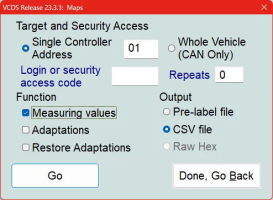
I’ve since bought genuine VCDS and done some logging. The replacement pressure sensor appears to behave consistently: approximately 0 mbar engine off, 20 mbar warm idle, 52 mbar at 2500 rpm stationary, and up to around 250–260 mbar under very heavy load. Pressure follows exhaust flow very closely.
When the latest P2459 was recorded the freeze frame showed 2530 rpm, 79.6% load, 461 m³/h exhaust flow, 220.6 mbar DPF pressure and almost exactly 30 g calculated/measured soot.
I’ve also logged requested vs actual boost and turbo actuator position, which both look very good. Rail pressure follows requested closely. Injector 4 is a slight idle-balance outlier, but nothing so far strongly suggests a failed injector.
On a recent ~1-hour drive the van went from roughly 198 km to 257 km since the previous regen without requesting another regen. Calculated soot only rose from about 13.1 to 14.3 g, while measured soot rose from about 15.5 to 19.1 g.
One possibly relevant detail: the problem first appeared after I changed the air, fuel and oil filters earlier this year. The oil meets VW 507.00. I don’t believe the air-filter adaptation was reset afterwards.
I’m currently waiting to catch a complete natural regeneration with VCDS so I can see the trigger point, pressure/temperature behaviour and post-regen soot values.
I’d be very interested in opinions on whether the ~20 mbar warm-idle DPF pressure looks excessive for this engine, whether the soot-model divergence is significant, and whether anyone has seen P2459 caused by injector issues, air-filter adaptation, residual DPF restriction or ECU software on the DAUB.
I have the full Auto-Scan and CSV logs if useful.
Any help is really appreciated.
Cheers
Chris